


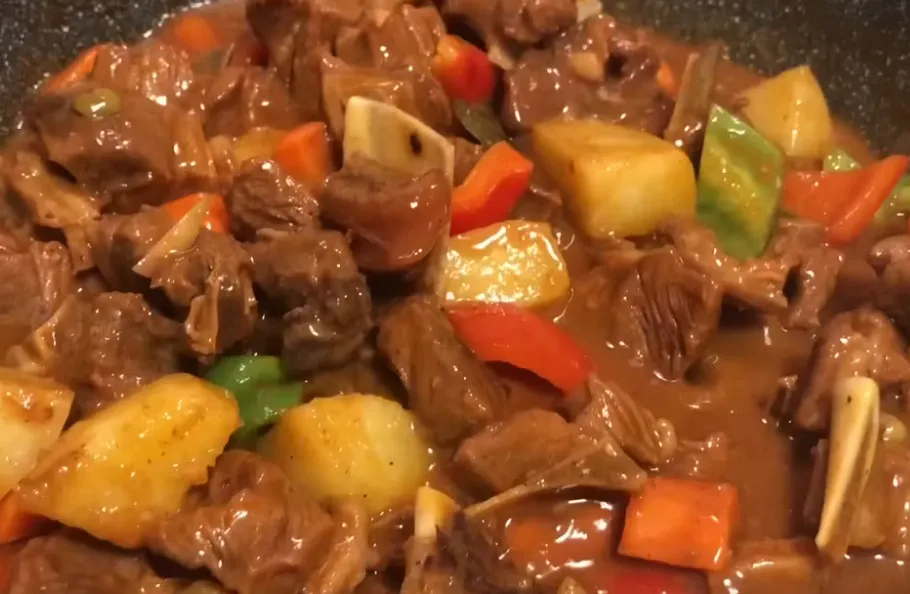
When it comes to Filipino celebrations, few dishes evoke the same rich flavor and festive warmth as Kalderetang Kambing. This beloved goat meat stew is more than just a special-occasion meal—it’s a testament to Filipino culinary creativity, especially in provinces where goat meat is prized. With its bold flavors, tender meat, and savory sauce, this dish continues to win hearts at gatherings, fiestas, and family Sundays.
What is Kalderetang Kambing?
Kalderetang Kambing is a beloved Filipino dish made from goat meat stewed in a savory tomato-based sauce with liver spread, vegetables, and spices. This dish is often served during special occasions or fiestas, especially in rural provinces where goat farming is common. However, the secret to great kaldereta lies not just in the ingredients—but in properly tenderizing and removing the “lansa” (gamey taste) of the goat meat.
How to Prepare Goat Meat for Kaldereta
Goat meat can be tough and gamey if not prepared correctly. Here are tried-and-tested tips for prepping your goat meat:
- Wash with vinegar and salt, then rinse thoroughly.
- Boil with aromatics (ginger, bay leaf, peppercorn, lemongrass) for 15–20 minutes to remove odor.
- Marinate for extra flavor: You may soak it in Sprite, pineapple juice, or buko juice for 1–2 hours.
- Optional herbs: Lemongrass (tanglad) adds a refreshing, earthy flavor and helps mask any residual odor.
KALDERETANG KAMBING
Ingredients
For Pre-Boiling (Deodorizing & Tenderizing):
- 3 kg goat meat, chopped into serving pieces
- 1 liter Sprite or buko juice (optional)
- 3 stalks tanglad (lemongrass), smashed
- 1 thumb-sized ginger, sliced
- 3 pcs bay leaves
- 2 tbsp vinegar or calamansi juice
- 1 tbsp salt
- 1/2 tsp peppercorn
- Enough water to cover meat
For the Kaldereta Sauce:
- 4 tbsp cooking oil
- 1 head garlic, minced
- 5 medium onions, chopped
- 1 cup liver spread (Reno or similar)
- 3/4 cup tomato paste
- 2 cups tomato sauce
- 1 cup grated cheese or Eden cheese (optional, for creaminess)
- 2 pcs red & green bell pepper, sliced
- 2 pcs potatoes, cubed and fried
- 2 pcs carrots, sliced and fried
- 1/2 cup green peas (optional)
- 1/2 cup soy sauce
- 2 tbsp oyster sauce
- 2 tbsp Worcestershire sauce
- 1/4 cup cane vinegar
- 2 tbsp sugar
- Salt & pepper to taste
- Chili flakes (optional for spiciness)
- Water or stock as needed
Instructions
1. Clean and Pre-Boil the Goat Meat
- Wash the goat meat thoroughly in running water.
- In a large pot, combine goat meat, buko juice or Sprite, tanglad, ginger, bay leaves, vinegar or calamansi, peppercorn and salt.
- Add enough water to cover the meat.
- Bring to a boil, skim off the scum, then simmer for 30–45 minutes or until meat is tender but not falling apart.
- Drain and set aside. Discard the boiling liquid.
2. Sauté the Aromatics
- In a separate large kawali or wok, heat oil.
- Sauté garlic and onions until fragrant and slightly browned.
3. Add the Tomato Base
- Add tomato paste and cook for 2–3 minutes.
- Pour in the tomato sauce and liver spread. Stir until well mixed and oil starts to separate.
- Add soy sauce, oyster sauce, Worcestershire sauce, vinegar (don’t stir until it simmers), then sugar. Let it cook for another 5 minutes.
4. Add the Meat
- Add the pre-boiled goat meat.
- Mix thoroughly to coat with sauce.
- Pour enough water or stock to submerge the meat halfway.
- Simmer for 30–40 minutes, stirring occasionally until meat is fully tender and sauce thickens.
5. Add Vegetables and Final Touches
- Add bell peppers, carrots, potatoes, and green peas.
- Add cheese and chili if using.
- Simmer for another 10–15 minutes until veggies are cooked but not mushy.
- Adjust seasoning (salt, pepper, sugar) to taste.
Frequently Asked Questions (FAQs) About Kalderetang Kambing
What makes Kalderetang Kambing different from beef or pork kaldereta?
Kalderetang Kambing uses goat meat, which has a distinct gamey flavor and leaner texture compared to beef or pork. Special preparations like marinating in vinegar or spices help reduce any strong aftertaste, making it uniquely flavorful.
How do you remove the “lansa” or gamey smell of goat meat?
You can soak the goat meat in vinegar, calamansi juice, pineapple juice, or Sprite for 30 minutes to 1 hour before cooking. Adding aromatics like ginger, peppercorn, bay leaf, and tanglad (lemongrass) during boiling also helps neutralize the odor.
Is it necessary to use tomato sauce in Kalderetang Kambing?
Traditionally, yes, but there are regional versions that skip tomato sauce and rely on liver spread, soy sauce, or other flavorings. Tomato sauce gives it a richer and more classic caldereta flavor.
Can I use evaporated milk instead of all-purpose cream?
Yes, especially in budget-friendly or home-style versions. Evaporated milk adds creaminess without overpowering the savory sauce.
Why do some recipes use oyster sauce or Worcestershire sauce?
hese sauces add depth of flavor and umami richness. Oyster sauce gives a sweet-savory note, while Worcestershire brings a hint of tanginess and complexity to the dish.
What is the best cut of goat meat to use?
Meaty parts like the shoulder, ribs, or leg are ideal. These cuts become tender after slow cooking and absorb the sauce well.
Can I cook Kalderetang Kambing in advance?
Yes! In fact, the flavors deepen overnight. Store in an airtight container in the fridge and reheat gently the next day.
Is Kalderetang Kambing healthy?
Goat meat is generally leaner than beef and pork, and is rich in protein and iron. Just be mindful of added fats and sodium, especially if using liver spread or sauces.
Can I cook this dish without liver spread?
Yes. While liver spread adds richness and body to the sauce, you can substitute it with mashed liver or even peanut butter for a creative twist.
What dishes go well with Kalderetang Kambing?
It pairs best with steamed rice, but also goes well with garlic fried rice or warm pandesal. Some even enjoy it with a cold beer during special occasions!
Final Tips:
- Always pre-boil goat meat with aromatics and tanglad before cooking your final dish to ensure the smell is gone and the texture is just right.
- You can cook Kalderetang Kambing ahead of time. Like adobo, it tastes even better the next day!
- If the meat is still tough after stewing, continue cooking on low heat or use a pressure cooker.
- Choose fresh or young goat meat (locally known as “chevon”) for a less gamey flavor.
Conclusion
Kalderetang Kambing is more than just a festive Filipino dish — it’s a celebration of culture, tradition, and bold flavor. With the right preparation, you can transform goat meat into a rich, savory stew that rivals even the most popular beef or pork versions. Whether you’re cooking for a fiesta, a Sunday gathering, or simply craving something special, this dish offers a satisfying blend of spice, creaminess, and nostalgia.
Don’t be afraid to experiment with ingredients. What matters most is balancing the flavors and cooking the meat to tender perfection.
Give Kalderetang Kambing a try — and experience a true taste of Filipino culinary heritage.