


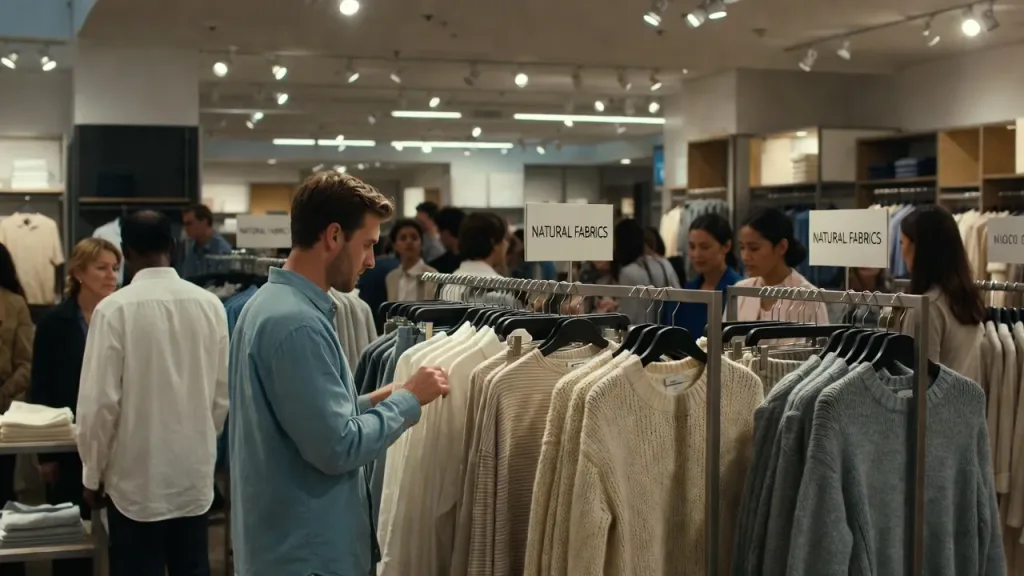
Search behavior in the United States is sending a clear signal: natural fiber clothing is no longer a niche preference—it’s becoming mainstream.
Recent Google Trends data shows that search interest in natural fibers has climbed more than 55% over the past year, reaching record levels. Queries such as “100% cotton clothing,” “100% linen,” “100% wool,” and “100% cashmere” are all hitting all-time highs, reflecting a growing consumer shift toward quality, comfort, and material transparency.
At the same time, questions about synthetics are surging—especially “is polyester bad”, which recently reached a record peak, and “is polyester high quality,” now the fastest-rising “is…high quality” apparel-related search.
Together, these trends reveal a fundamental change in how Americans think about clothing.
The Rise of “100%” Natural Fiber Searches
One of the most notable patterns in search data is the growing demand for purity and clarity. Shoppers are no longer satisfied with vague labels like “cotton blend” or “eco-inspired fabric.” Instead, they are explicitly searching for “100%” natural fibers.
Among the fastest-growing searches:
- 100% cotton clothing
- 100% linen
- 100% wool
- 100% cashmere
This indicates a consumer mindset shift—from trend-driven purchasing to material-driven decision-making.
Why “100% Cotton” Is Leading the Pack
Among all natural fibers, cotton is the top-trending natural material over the past year. Searches for “100 cotton clothing” now dominate material-specific apparel queries.
Cotton’s popularity is driven by:
- Breathability and comfort
- Familiarity and trust
- Perceived safety for skin
- Ease of care compared to other natural fibers
For many U.S. consumers, cotton represents a reliable balance between comfort, quality, and price.
Polyester Under the Microscope
As natural fiber interest rises, synthetic fabrics—especially polyester—are facing growing scrutiny.
The question “is polyester bad” recently reached an all-time high in search interest, while “is polyester high quality” has become the most searched quality-related comparison phrase involving fabric.
This reflects growing consumer concerns around:
- Breathability and heat retention
- Microplastic shedding
- Long-term durability
- Environmental impact
- Skin sensitivity and odor retention
Rather than rejecting polyester outright, consumers are actively researching its trade-offs, signaling a more informed and cautious buyer.
Quality vs. Cheap: A Narrowing Gap
Another important insight from search trends is the changing relationship between “quality” and “cheap” apparel searches.
Searches related to “quality clothing” are at an all-time high, while interest in “cheap clothing” remains strong—but the gap between the two is now slimmer than ever.
This suggests that U.S. shoppers are:
- Still price-conscious
- But increasingly unwilling to sacrifice durability and comfort
- Looking for longer-lasting value, not just lower prices
Natural fibers often sit at the center of this balance, offering a perception of better cost-per-wear over time.
Why Natural Fibers Are Gaining Trust
The surge in natural fiber searches is not driven by fashion alone. It reflects deeper consumer values:
1. Transparency
“100%” labeling offers clarity in an era of greenwashing and vague marketing claims.
2. Comfort and Performance
Natural fibers are associated with breathability, temperature regulation, and softness—qualities especially valued in everyday wear.
3. Health and Skin Awareness
More consumers are researching how fabrics interact with skin, sweat, and allergens.
4. Longevity
Quality-focused shoppers increasingly prioritize garments that last beyond one season.
What This Means for Apparel Brands and Retailers
For U.S. fashion brands and online retailers, these trends point to clear opportunities:
- Highlight material composition clearly
- Use precise language such as “100% cotton” rather than generic terms
- Educate consumers on fiber differences
- Address polyester concerns honestly rather than defensively
- Position natural fibers as value investments, not luxury exceptions
Brands that align with this shift toward quality, transparency, and education are better positioned to earn long-term trust.
The Bigger Picture: A Smarter Apparel Consumer
The data shows that American shoppers are not abandoning fashion—they are evolving.
They are:
- Asking better questions
- Comparing materials, not just prices
- Seeking quality without excess
- Making more intentional purchasing decisions
Natural fibers sit at the intersection of this shift, benefiting from rising awareness around comfort, durability, and material integrity.
Final Takeaway
Natural fiber clothing is being searched more than ever before—and the momentum shows no signs of slowing.
With cotton leading the way, linen and wool gaining traction, and polyester increasingly questioned, the U.S. apparel market is entering a new phase—one where quality, material honesty, and long-term value matter more than ever.
For consumers, this means better-informed choices.
For brands, it means adapting—or being left behind.
FAQ
1. Why are natural fiber clothing searches increasing in the U.S.?
Natural fiber clothing searches are rising as consumers become more focused on comfort, material transparency, and long-term quality. Shoppers are actively researching alternatives to synthetic fabrics, particularly as interest in sustainability, skin comfort, and durability grows.
2. Is polyester bad compared to natural fibers?
Polyester is not inherently bad, but it has trade-offs. Many consumers question polyester due to breathability, heat retention, and environmental concerns. Natural fibers like cotton, linen, and wool are often preferred for their comfort, airflow, and perceived quality.
3. What is the most popular natural fiber for clothing?
Cotton is currently the most searched natural fiber for clothing in the U.S. Queries such as “100% cotton clothing” lead material-based apparel searches, reflecting consumer trust in cotton’s comfort, accessibility, and versatility.
4. Are natural fibers higher quality than synthetic fabrics?
Quality depends on use and construction, but many shoppers associate natural fibers with better comfort, durability, and wearability. This perception is driving increased interest in natural materials as consumers seek better value over time.
5. Why do shoppers search for “100%” natural fibers?
Consumers increasingly look for “100%” labels to avoid blends and ensure material purity. Clear fiber composition provides transparency and helps buyers make informed decisions, especially when comparing natural and synthetic fabrics.
6. Is natural fiber clothing more expensive?
Natural fiber clothing can cost more upfront, but many shoppers consider it a better long-term investment due to durability, comfort, and reduced replacement frequency.
7. Which natural fibers are trending besides cotton?
In addition to cotton, search interest in linen, wool, and cashmere has reached record highs. These materials are commonly associated with seasonality, breathability, and premium quality.
8. Does natural fiber clothing perform well year-round?
Yes. Different natural fibers suit different climates—cotton and linen for warm weather, wool and cashmere for cooler seasons—making them versatile for year-round wear.