


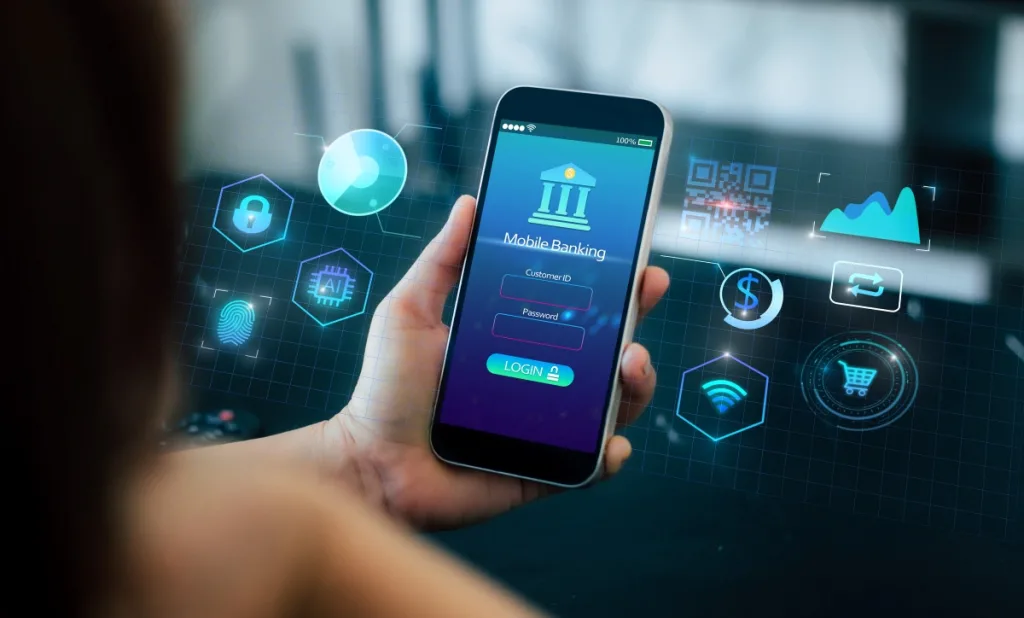
Are you aware that the global IoT in finance market is expected to touch $100+ billion by 2030? It is not surprising to witness such a massive growth when banks are moving from manual tracking to connected, automated, and sensor-driven systems worldwide.
IoT in banking is enhancing a structural change in the way financial firms manage security, customer experience, operational efficiency, and asset monitoring. With devices becoming smarter and data becoming richer, banks are offering faster, safer, and more adaptive services. Let us dig deeper and break down seven real-world use cases redefining the future of financial innovation.
Role of IoT in Banking & Financial Services
Do you still think that IoT in banking is all about adding smart devices to legacy systems? It is not true. IoT has pushed its limits in the banking sector to transform the way financial firms sense, interpret, and act on real-time data. Banks are unlocking unprecedented visibility into regular tasks by connecting physical assets, customer touchpoints, and backend operations. It is done by using sensors and intelligent networks.
IoT allows non-stop monitoring of crucial infrastructure, including ATMs, cash vaults, security systems, and branch equipment. Additionally, it supports next-level authentication methods through the integration of biometric wearables, smart mobile devices, and location-based verification. The goal is to strengthen identity checks without adding friction.
Analytics empowered by the IoT gives banks the capability to make data-based decisions regarding customer flow management, allocation, and branch improvements. Real-time insights into customer behavior allow banks to tailor offerings and identify anomalies quickly to alleviate risks.
IoT provides banks with the intelligence that they require to improve operations, security, and provide highly tailored experiences.
Real-World Use Cases of IoT in Banking
As IoT ecosystems grow, banks are uncovering innovative ways to create seamless, secure, and smarter financial ecosystems. These real-world apps show how connected devices are enabling the banking sector to elevate innovation. It also unlocks operational excellence by leveraging faster insights, smarter data, and automated workflows. Collaborating with an ideal financial software development company will help you build these advanced IoT-powered infrastructures that new-age banks depend on.
1. Customized Banking Through Connected Devices
IoT-driven devices provide banks with the strength to offer deeply individualized and timely services depending on real-time customer behavior. These insights unlock more adaptive banking interactions, whether it’s understanding spending habits, preferred channels, or physical movements.
How does it add value?
- Connected devices monitor user behavior to personalize financial suggestions.
- A geolocation alert could notify customers of nearby banking kiosks or ATMs.
- Connected home devices could provide balance updates, alerts, or reminders for payment.
- Wearables could send notifications or reminders about credit limit, EMI dues, or investments.
- Customer preferences can determine how personalized dashboards or digital native experiences adapt in real-time.
2. Smart ATMs with Remote Monitoring
Sensors-embedded modern ATMs help banks move to predictive from reactive service models. Internet of Things-enabled ATMs autonomously report component health, cash levels, and environmental conditions to facilitate seamless operations.
Transformational Benefits:
- Low cash levels and automated alerts enhance refilling precision.
- Sensors identify temperature swings, distortions, or shock attempts.
- Predictive maintenance minimizes unusual machine downtime.
- Real-time data allows banks to enhance ATM cash replenishment schedules.
- Reduce service visits and overall operational expenditure with remote firmware updates.
3. Elevated Security with Biometric Devices
Security is a critical element of IoT in banking, and biometric devices have proved themselves as an essential layer of defense. With IoT-backed authentication, banks are able to check identity more accurately, reducing dependency on physical cards or passwords.
Key Security Enhancements:
- Accessing an account is secure through the use of fingerprints, voice, or facial recognition.
- With wearable biometrics, users can authenticate transactions on the move.
- Geofencing confirms whether the customer is in a trusted location.
- Behavioral biometrics can register unusual motion related to typing or speech.
- Continuous authentication works to limit the risk associated with credential theft or use.
4. Cash Management Automation and Equipment Monitoring
Quite often, it is seen that cash-heavy banks struggle with balancing demand, machine availability, and replenishment expenses. IoT sensors simplify cash handling through monitoring ATM vaults, safes, teller machines, and storage units of different branches in real-time.
Optimizations enabled:
- Automated cash-level detection eliminates over- or under-filling.
- Predictive analytics schedules precise replenishment trips.
- Sensors monitor temperature, humidity, and vibration in vault areas.
- Real-time alerts reduce risks of theft, leakage, or malfunction.
- Usage patterns guide banks in redistributing resources to high-demand locations.
5. Contactless Payments and Wearable Banking
The earlier payment methods are redefined using IoT devices like smartwatches, rings, and NFC-backed accessories. These seamless ways elevate convenience and cut down dependence on physical wallets or cards.
What makes it effective?
- Wearables allow single-click pay functionality for quick checkouts.
- Auto-generate receipts and transaction logs through connected billing systems.
- Enhanced fraud detection using tokenized transactions.
- Sensors detect proximity to activate payment modes securely.
- Real-time spending alerts promote better money management.
6. Real-Time Fraud Detection and Prevention
For detecting fraud as it happens, banks are rapidly leveraging IoT-driven monitoring systems. Organizations can instantly detect anomalies by analyzing device data, location signals, transaction behavior, and biometric inputs.
IoT-Driven Fraud Reduction Strategies:
- Improper location detection flags untrusted transactions instantly.
- Multi-device approval confirms if the same use is logged in or not.
- Sensors detect abnormal ATM activities like skimming attempts.
- Transaction patterns are seamlessly analyzed for uncertainties.
- Alerts trigger instantaneous account lockdowns for high-risk activity.
7. Optimized Branch Management with IoT
IoT is facilitating the banks in designing smarter and more responsive branches able to efficiently operate and offer top-notch service to their customers. From energy utilization to queue management, connected systems allow dynamic decision-making and real-time visibility.
Operational enhancements include:
- Smart cameras track crowd density to minimize wait times.
- Sensors monitor customer activities to enhance layout planning.
- Automated lighting and HVAC (heating, ventilation, and air conditioning) systems reduce energy wastage.
- IoT-powered scheduling tools simplify workforce allocation.
- Device tracking ensures kiosks, displays, and printers operate efficiently.
With these use cases, IoT in banking is not only about enabling digital transformation but also about defining the next generation of hyper-connected, customer-focused, and secure financial services. With massive data, smarter devices, and predictive intelligence, banks can create environments responding intuitively to user requirements while enhancing operational resilience.
Emerging IoT Use Cases Transforming the Future of Banking
With the evolution of connected ecosystems, financial institutions have started exploring advanced IoT-backed innovations. These innovations go beyond customer convenience and operational efficiency. Such applications point to the next wave of cutting-edge systems in the financial sector. In this era, immersive interactions, decentralized security, and predictive intelligence transform online banking’s possibilities.
#1. Augmented Reality (AR) Banking Experiences
When IoT-backed devices are integrated with AR, it will redefine how customers visualize and communicate with their financial data. From scanning branch environments to projecting virtual dashboards, AR-enabled banking will offer richer, more contextual experiences.
What does this unlock?
- 3D interactive visuals of account information and spending graphs
- Virtual help with navigation of bank locations and ATM locations
- AR overlays of loan eligibility, EMI analysis, and investment possibilities
- Real-time notifications as per the user’s environment
#2. AI-Enhanced Predictive Financial Recommendations
AI-powered algorithms combined with IoT insights will anticipate customer needs before they arise. Banks can proactively recommend intelligent financial decisions by analyzing spending patterns, device activity, and lifestyle data.
Future benefits:
- Hyper-personalized budgeting recommendations
- Advanced alerts for overspending or unusual activity
- Predictive savings and investment
- Real-time IoT-based, automated financial planning
#3. Blockchain-Driven IoT for Secure Transactions
Blockchain and IoT development services combinedly power the trust and transparency layer within financial communications. This mixed ecosystem allows tamper-proof records, decentralized validation, and secure data exchange across IoT networks.
Key transformations:
- Immutable transaction logs for audits
- Secure device-to-device payments
- Reduced fraud through distributed verification
- Trusted data sharing across interconnected banking systems
The Bottom Line
In the end, we can easily say that IoT in banking is no longer a technological upgrade. Banks and financial institutions are transforming the methods they service, operate, and safeguard customers. Having real-world examples from predictive maintenance to tailored banking services, IoT-embedded solutions are helping banks operate faster, smarter, and securely.
Banks embracing IoT early will undoubtedly gain a competitive edge as customer expectations are taking a long jump. The opportunity resides in developing connected devices into data-rich decision-making, to enable financial service delivery to be safer, more efficient, and more responsive. Organizations that act now will not only be a part of the transformation in the industry but rather, a leader in the transformational process.