


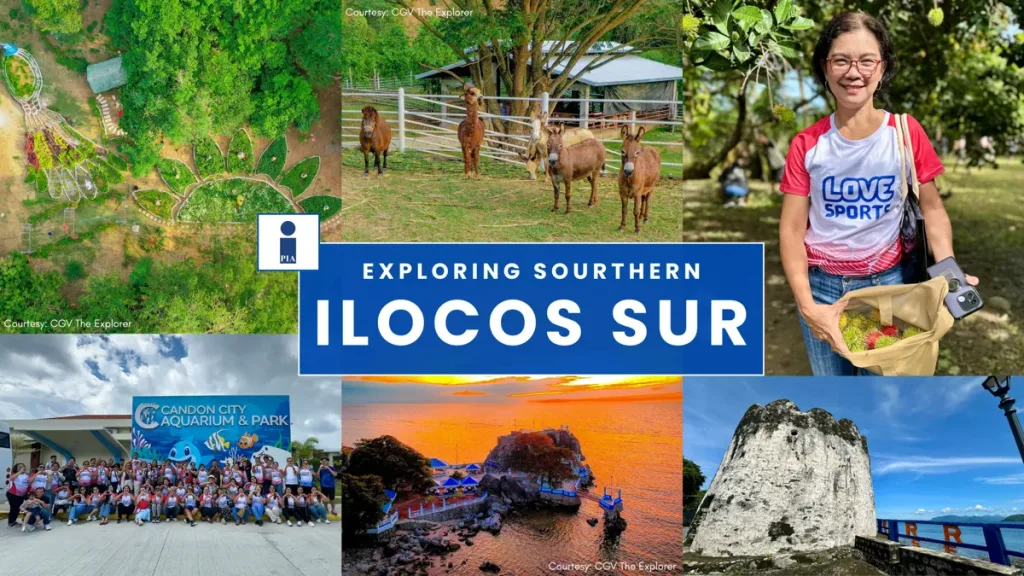
Introduction: The Allure of Southern Ilocos Sur
Ilocos Sur, a province known for its rich heritage, warm people, and unspoiled natural beauty, continues to captivate travelers seeking authentic and immersive experiences. Beyond the UNESCO-listed Vigan, the southern towns of Ilocos Sur are rising tourism hotspots — offering a mix of fruit-picking farms, eco-adventures, and historical landmarks that reflect the Ilocano spirit of resilience and ingenuity.
From the fertile farmlands of Salcedo to the rugged coastline of San Esteban, every corner of southern Ilocos Sur tells a story — one that blends tradition, livelihood, and sustainability.
Rambutan Harvest in Salcedo: A Sweet Taste of Community Farming
When the vibrant red spikes of rambutan fill the orchards of Salcedo, the air turns festive. The town recently celebrated its first-ever Banat Kadiwa cum Rambutan Harvest Fair, drawing locals and tourists eager to enjoy fruit-picking, eating contests, and seedling sales. Over 2,000 kilograms of fresh rambutan were offered during the event.
According to Mayor Niña Gironella-Itchon, the initiative aims to promote agritourism while supporting the town’s 2,185 rambutan growers. Through a local ordinance, residents can now receive free rambutan seedlings to expand backyard and commercial production.
“We have a processing facility and aim to produce rambutan byproducts such as dried rambutan and jams,” Itchon shared.
This approach not only sustains agriculture-based livelihoods but also introduces agro-tourism as a pillar of sustainable rural development.
Visitors can enjoy the fruit-picking season at O’fam in Sitio Ronquillo, Barangay Calangcuasan, and Bakaan Farm and Resort in Barangay Poblacion Sur — both offering hands-on experiences for just ₱100 per person.
Candon City Ecotourism Park: A Green Haven for Nature Lovers
For travelers seeking a mix of adventure and relaxation, Candon City Ecotourism Park offers 395 hectares of eco-friendly activities. Spread across four barangays, the park features biking and walking trails, birdwatching zones, and opportunities for cow and goat milking — a favorite among families and students.
Guests can also explore bamboo plantations, visit livestock farms, and taste authentic Ilocano cuisine at the park’s food hall. The park integrates environmental conservation with tourism, serving as a model for sustainable travel in Ilocos Sur.
Adding cultural depth, the Bago tribe houses in the park preserve the stories and traditions of former landowners, offering visitors a glimpse into Ilocano heritage and ancestral life.
Candon City Aquarium: The Region’s First Marine Learning Hub
A short trip from the park leads to the Candon City Aquarium and Park, the first of its kind in the Ilocos Region. Inside, visitors can marvel at a wing reef sanctuary, anemone alley, and shark exhibits — all designed to educate the public about marine biodiversity and coastal conservation.
Admission rates are family-friendly: free for children under 2, ₱100 for kids aged 12 and below, ₱200 for adults, and ₱150 for seniors and PWDs. A nearby seaside park provides shaded spots for picnics and play areas where families can unwind while enjoying the scenic Ilocos coastline.
Moro Watchtower of San Esteban: A Sentinel of the Past
Standing proudly along the San Esteban coastline is the 16th-century Moro Watchtower, an enduring relic of Ilocos Sur’s seafaring history. Once used as a lookout against pirates, this cylindrical stone structure now serves as both a heritage site and a panoramic viewpoint.
Declared a National Cultural Treasure in 2015, the watchtower was renovated the following year to ensure preservation. Its strategic location allows travelers to gaze across the West Philippine Sea, imagining how early Ilocanos once defended their shores.
For history enthusiasts, this site is a must-visit — a testament to Ilocos Sur’s role in maritime defense and the artistry of pre-colonial architecture.
Mapisi Rock: Nature’s Sculpture in Santiago
In Barangay Ampucao, Santiago, the majestic Mapisi Rock stands as a natural wonder shaped by time and tides. Its name, “Mapisi,” meaning “cut” or “broken” in Ilocano, describes the unique coral formation split by natural forces.
To accommodate the growing number of visitors, local authorities developed cottages, a pavilion, and a viewing deck in January 2024. The entrance fee is ₱20, while cottage rentals cost ₱750 per day, and pavilion use is ₱3,000.
Locals also sell cultured sea urchins (maritangtang) and homemade snacks, creating new income opportunities for coastal residents.
“Some of our constituents farm sea urchins, which we now sell to tourists,” shared Barangay Captain Ruben Agosto.
The site’s eco-friendly development has made it a model for community-based tourism in Ilocos Sur — balancing natural preservation with livelihood generation.
Southern Ilocos Sur: Tourism, Culture, and Sustainability
The 2025 Region 1 Tourism Summit held in September spotlighted these southern gems, positioning Ilocos Sur as a leader in eco-cultural tourism. The event emphasized collaboration between local government units, the Department of Tourism (DOT), and private stakeholders to promote inclusive, sustainable growth.
From the sweet orchards of Salcedo to the rocky shores of Santiago, the southern municipalities embody Ilocos Sur’s brand of tourism — authentic, inclusive, and environmentally conscious.
Whether you’re an adventurer, a history buff, or a traveler seeking peace and nature, Southern Ilocos Sur offers destinations that connect culture, livelihood, and natural charm.
Call to Action: Experience Ilocos Sur’s Untold Stories
Discover the heart of Ilocano heritage by visiting southern Ilocos Sur. Support local farmers, engage in sustainable tourism, and immerse yourself in a journey that celebrates both people and place.
Plan your trip today — and witness how community-driven tourism turns Ilocos Sur’s hidden gems into national treasures.
References
- Department of Tourism – Region I. (2025). Region 1 Tourism Summit Highlights. Retrieved from https://dotregion1.ph
- Philippine Statistics Authority. (2024). Ilocos Region Tourism and Economy Report. Retrieved from https://psa.gov.ph
- Department of Agriculture. (2024). Agro-Tourism and Farm Diversification Initiatives. Retrieved from https://da.gov.ph
- Salcedo LGU – Official Facebook Page. (2025). Banat Kadiwa cum Rambutan Harvest Fair. Retrieved from https://www.facebook.com/SalcedoIlocosSurLGU
- Candon City Government. (2025). Candon Ecotourism Park Development and Biodiversity Program. Retrieved from https://www.candoncity.gov.ph
- National Museum of the Philippines. (2015). Declaration of San Esteban Watchtower as National Cultural Treasure. Retrieved from https://www.nationalmuseum.gov.ph
- Santiago Municipal Tourism Office. (2024). Mapisi Rock Tourism Development Report. Retrieved from https://santiagoilocossur.gov.ph