


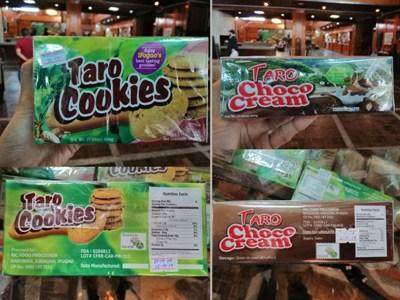
Taro (Colocasia esculenta), locally known as “gabi”, is a starchy root crop rich in dietary fiber and carbohydrates. While traditionally grown as a source of animal feed in Northern Luzon, particularly in Ifugao, this humble crop is now making its way into the mainstream market — not as livestock fodder, but as a base for authentic Filipino delicacies that are creating jobs and boosting local tourism.
From Root Crop to Pasalubong Favorite
In Ifugao, taro is now processed into various sweet and flavorful treats like Taro Cookies, Taro Choco Chip, Taro Choco Cream, and Taro Choco Voron. These products are fast becoming pasalubong staples for tourists and visitors in the Cordillera region, particularly those traveling through Banaue and Kiangan.
What began as a community initiative has now grown into a viable small enterprise with high market potential.
Government Support Fuels Local Agribusiness
In 2017, the Provincial Local Government Unit (PLGU) of Ifugao submitted a proposal to the Bureau of Agricultural Research (BAR) under the Department of Agriculture. The aim was to enhance the marketability of local products, including coffee, Tinawon rice, and taro-based food items, as a means of increasing farmer income and creating sustainable livelihood opportunities.
The proposal was approved under BAR’s National Technology Commercialization Program (NTCP) through the project titled:
“Product Improvement and Promotion of Coffee, Tinawon Rice, and Taro Products.”
BAR’s support included:
- Product improvement and development
- Packaging and labeling design assistance
- Skills training for food processors
- Promotional activities and events
- Simple cost and return analysis for profitability
Rural Women at the Heart of Production
The Rural Improvement Club (RIC) Food Processors of Baguinge, Kiangan, Ifugao, play a pivotal role in this project. The group, composed mostly of women in the community, is one of the ten assisted organizations in the province.
Led by Lety Dogwe, Cluster-5 of RIC is directly involved in food processing, while other members help in sourcing raw taro from barangays like Haliap and Asipulo (for taro supply), and Baguinge and Nagacadan (for logistics and manpower support).
Production Capacity and Output
The club processes:
- 28 kilos of taro per week for 240 boxes of Taro Cookies
- 15 kilos of taro per week for 210 boxes of Taro Choco Cream
These numbers can double during peak demand seasons or bulk orders, proving the potential scalability of the operation.
Market Reach and Sales Channels
The taro delicacies are now sold in:
- Banaue Hotel
- Souvenir shops, restaurants, and lodges in Banaue, Kiangan, and Lagawe
- Tam-an Resort in Bayombong, Nueva Vizcaya
- DTI-OTOP Hub in Baguio
- Local trade fairs and exhibits
Their presence in both local and regional markets boosts their visibility and provides a consistent income stream for the producers.
Recognition and Exposure
The products gained national exposure when they were featured at the 14th Agricultural Fisheries Technology Forum and Product Exhibition held on August 30 to September 2, 2018, at SM Megatrade Hall in Mandaluyong City. This helped strengthen the branding and credibility of taro products from Ifugao as premium-quality pasalubong items.
Community Impact and Future Potential
“This is a testament that government money has not been put to waste,” said former BAR Director Nicomedes P. Eleazar during an official visit to Banaue Hotel. “The goal of funding this initiative is to commercialize local food technologies and ensure they reach the mainstream market.”
Leader Lety Dogwe also shared:
“We are thankful for the assistance provided to us to improve our product packaging and increase our market reach. The initiative not only gave farmers additional income but also opened up job opportunities for women in food processing.”
Conclusion: A Model for Localized Agricultural Innovation
The story of taro in Ifugao is more than just about food—it is about empowerment, innovation, and community resilience. Through strong collaboration between the government and local organizations, a once-overlooked crop is now creating income-generating opportunities for farmers and food processors alike.
As these products continue to evolve, they could serve as a blueprint for other provinces aiming to turn their local produce into value-added food products — one delicacy at a time.