


What Is Vermicomposting?
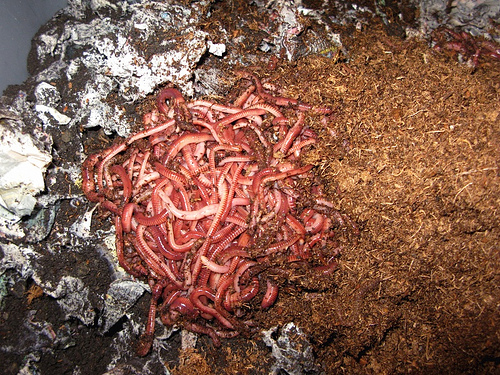
Vermicomposting is the eco-friendly process of turning organic waste into nutrient-rich compost using earthworms, especially the African Nightcrawler. Compared to traditional composting, which takes 8–12 weeks, vermicomposting takes only 4–6 weeks and results in higher-quality fertilizer.
The end product, called vermicast or worm manure, enhances soil quality and serves as a natural fertilizer for organic farming. The worms can also be sold or used as feed for fish and poultry.
Why Start a Vermicomposting Business in the Philippines?
- High demand for organic fertilizer
- Low startup costs and scalable setup
- Supports waste management initiatives
- Ideal for urban and rural farming
Startup Costs for a Vermicomposting Business
Estimated capital requirement ranges from P5,000 for backyard scale to P50,000 for commercial scale.
Basic Tools Needed
- Gardening gloves
- Strainer or sifter
- Spading fork
- Shovel
Raw Materials and Packaging
- Vermi (African Nightcrawlers)
- Biodegradable waste: vegetable trimmings, peelings, dry leaves, aged animal manure
- Vermi beds (2m x 1m x 0.3m)
- Black plastic garbage bags
- 50-kg capacity plastic sacks
Optional Equipment
- Mechanical shredder
- Bicycle-powered waste sorter
Step-by-Step Process of Vermicomposting
1. Collect Organic Waste Materials
Gather food scraps, vegetable trimmings, dried leaves, and aged manure.
2. Shred or Grind the Waste
For faster decomposition, grind or shred the materials.
3. Mix with Old Animal Manure
Use manure at least two months old to avoid ammonia that can harm worms.
4. Partial Fermentation
Sun-dry the mix for at least 3 days to allow partial fermentation.
5. Prepare the Compost Bed
Weigh the shredded mix and evenly spread it in the vermi bed.
6. Start Anaerobic Process
Moisten the bed, then cover with banana leaves or plastic sacks. Leave for 1–2 weeks.
7. Add the Worms
After fermentation, introduce the African Nightcrawlers to the bed.
8. Maintain Moisture and Temperature
Keep the bed moist, and protect from direct sunlight and predators.
9. Harvest the Vermicompost
After 30–45 days, separate worms from compost by hand or sifter.
10. Storage and Reuse
Pack compost in sacks and store in a cool, dry place. Use worms for the next cycle or sell them.
Profit Potential of Vermicomposting
Sample Output & Earnings
- 1 vermi bed = 12 harvests/year
- Input: 150 kg waste + 2 kg worms = 90 kg compost
- Sell Price: P20.00/kg
- Annual Revenue per Bed: 90 kg x 12 x P20 = P21,600
Worms reproduce rapidly. From 2 kg, you can get 4 kg in a month, which can be sold or used to expand your production.
Business Requirements in the Philippines
1. Business Name Registration
Visit the DTI (Department of Trade and Industry) office near you. Validity: 5 years.
2. Mayor’s Permit
Secure from your local municipal or city hall.
3. BIR Registration (TIN)
Apply for your Tax Identification Number at the BIR regional office.
Funding Sources for Vermicomposting
People’s Credit and Finance Corporation (PCFC)
Microfinance loans through partner institutions.
Agricultural Credit Policy Council (ACPC)
Offers agri-based microloans via partner MFIs.
Training and Technical Support
You can get training and support from the following:
1. Department of Agriculture (DA)
Bureau of Plant Industry – Crop Research Division
692 San Andres Street, Malate, Manila, Philippines
E-mail: bpi.do@buplant.da.gov.ph / info@buplant.da.gov.ph
Tel. Nos.: 8525-2987 / 8521-7650 / 8332-7567 / 8353-6976
2. Department of Environment and Natural Resources (DENR)
Ecosystems Research and Development Bureau (ERDB)
University of the Philippines, Los Baños, Laguna
E-mail: erdb@denr.gov.ph
Tel. Nos.: (049) 536.2269 / 536.2229
Fax No.: (049) 536.2850
– Training and pilot demo on vermicomposting and supply of breeders
3. Department of Science and Technology (DOST)
Philippine Council for Aquatic and Marine Research and Development
Jamboree Road, Brgy. Timugan, Los Baños, Laguna
Email: pcamrd_email@yahoo.com; pcamrd@laguna.net
Tele/Fax No.: (049) 536.1582
– PCAMRD Manila Liaison Office
2/F, Room 205, PTRI Building,
Gen. Santos Ave., Bicutan, Taguig, Metro Manila
Tel. No.: (02) 837.2071 loc 2430
www.pcamrd.dost.gov.ph
4. Solid Waste Management Association of the Philippines
3/Floor, Philippine Medical Depot, NBS Building,
Scout Borromeo corner Quezon Avenue,
Quezon City, Philippines
0917-8124026/0915-7939888
E-Mail: info@swapp.net.ph
5. Buro-Buro Vermi Farm
Sitio Balogo, Brgy. Concepcion, Talisay City
Email: owapam@gmail.com
Tel Nos.: (034) 433.6880 / 433.0362 / 712.1100
Batchoy Henares: 0917.8543939
Pamela Henares: 0917.3015250
www.vermiphil.com
Fun Facts About Vermicomposting
- “Vermi” is another name for earthworms.
- African Nightcrawlers are the preferred species in the Philippines.
- Earthworms are hermaphrodites and reproduce weekly.
- A mature worm can produce up to 3 young worms weekly.
Final Thoughts
Starting a vermicomposting business is a low-cost, sustainable, and profitable venture—perfect for aspiring entrepreneurs, farmers, and eco-advocates. Whether you’re starting small or aiming for commercial production, the Philippines offers fertile ground (literally and figuratively) for this green business.
Does the vermicomposting business need to have a ECC permit from the DENR-EMB?
Im interested to make this business.. i have decided to make a feasibility study
greetings!! I am very much interested in Vermicomposting business. I need a complete study.
interested vermicomposting business