


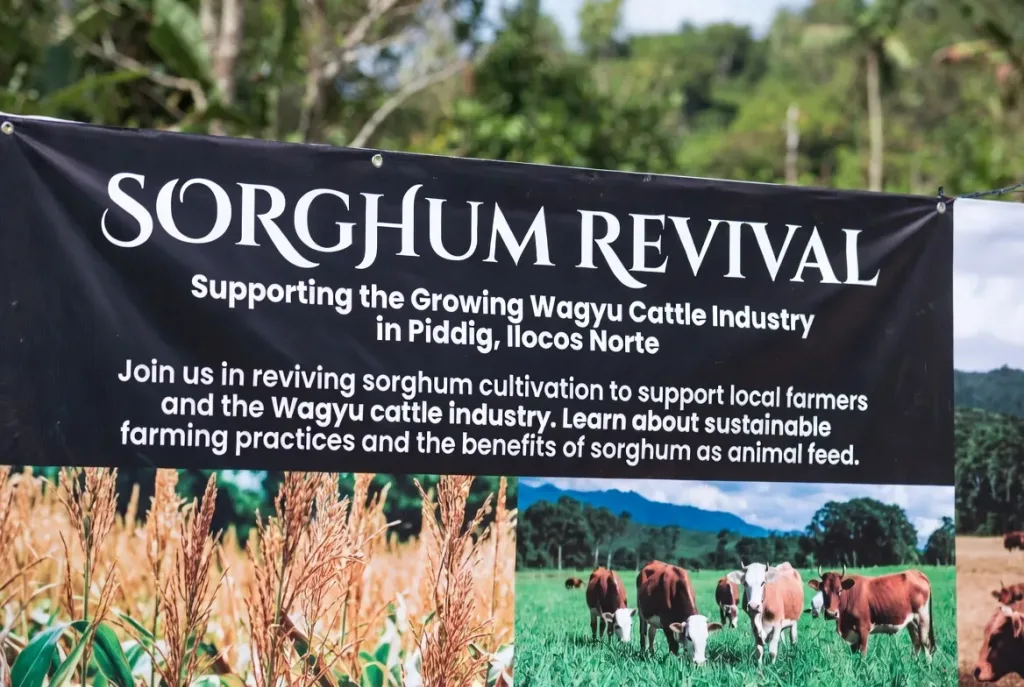
In the farmlands of Barangay Tonoton in Piddig, Ilocos Norte, a traditional crop known locally as “bukakaw” is making a comeback. Sorghum, once a common sight in the area, is being reintroduced as a strategic response to a pressing local need: providing sustainable feed for the town’s expanding wagyu cattle industry.
Former Agriculture Secretary Manny Piñol recently announced plans to establish a 13-hectare pilot sorghum farm in Barangay Tonoton. The project aims to introduce modern sorghum varieties to local farmers and demonstrate their potential as a reliable feed source for livestock.
The initiative was undertaken following a request from National Irrigation Administration (NIA) Administrator Eduardo Guillen, who previously served as mayor of Piddig and has been closely involved in agricultural development efforts in the municipality.
More Than Crop Production
According to Piñol, the program goes beyond simply planting sorghum.
“This is really about helping farmers adjust to changing conditions,” he explained.
Part of the project includes training farmers in the production of silage, a method of preserving high-moisture crops to ensure a continuous supply of animal feed throughout the year. This approach is intended to protect livestock raisers from seasonal shortages and fluctuating feed prices.
Why Sorghum Makes Sense
Sorghum is well-suited to Piddig’s needs. It is nutrient-rich, high in protein, and tolerant of dry and challenging growing conditions. Compared to corn, which has become increasingly difficult and costly to produce, sorghum offers a more resilient and dependable alternative for livestock feed.
With the municipality’s cattle population increasing, especially high-value breeds, corn alone can no longer meet demand.
Feeding a Growing Wagyu Population
Since 2021, Piddig has been upgrading its native cattle through artificial insemination using wagyu genetics. This initiative has gradually increased the number of wagyu and wagyu-cross cattle in the area.
As wagyu numbers grow, so does the requirement for consistent, high-quality nutrition.
“Wagyu cattle need careful and well-managed feeding programs,” Piñol noted. “That’s one of the reasons they command higher market prices.”
Farmers See Hope in Bukakaw’s Return
Local farmers have welcomed the revival of sorghum. Rey Santos, a farmer from the area, described the project as a much-needed boost for the community.
“Agriculture is our main livelihood,” he shared. “Bringing back bukakaw gives us a more stable way to feed our cattle and support our families.”
Santos added that sorghum is easier and less expensive to cultivate, and having a dependable feed source helps farmers maintain healthy livestock and access income when emergencies arise.
Strengthening Agricultural Resilience
Beyond its role as animal feed, the sorghum initiative reflects a broader push toward agricultural resilience and diversification. Introducing alternative crops reduces dependence on a single feed source and helps farmers better cope with climate variability and market uncertainties.
As sorghum once again grows in the fields of Piddig, local farmers hope it will not only nourish their cattle but also strengthen a developing livestock industry—one that offers improved income, sustainability, and long-term economic opportunities for the community.