

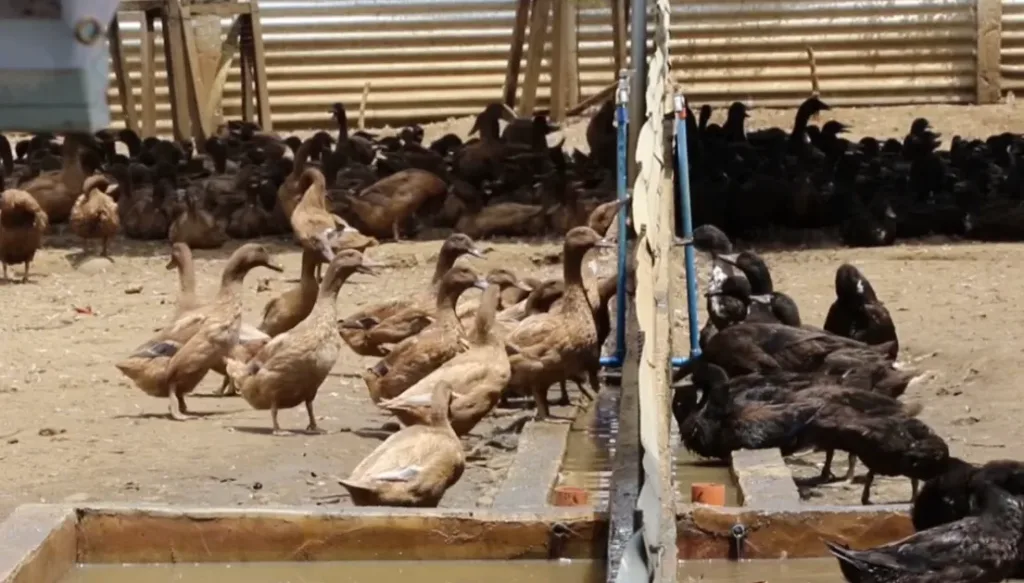
Duck farming—or itik farming—is a time-honored practice in the Philippines that continues to play a vital role in the livelihood of many rural families. It remains one of the most sustainable and profitable ventures in local agribusiness due to the high demand for duck eggs and meat.
Filipino ducks, commonly known as itik, are hardy, adaptive, and efficient converters of feed into products. They thrive in humid climates, can forage naturally in rice paddies, and require relatively low maintenance compared to other poultry. These traits make duck raising/ itik farming an ideal enterprise for both backyard raisers and commercial producers.
Duck products such as balut, penoy, and salted eggs are beloved delicacies across the country. Balut, in particular, has become a cultural icon and export item, creating steady market demand. Recognizing the potential of the duck industry, the Department of Agriculture (DA) continues to improve local breeds and production systems to increase profitability, food security, and livelihood opportunities.
One such innovation is the Itik Pinas, an improved native breed known for its consistent laying capacity, resilience, and adaptability to Philippine conditions.
Choosing the Right Duck/ Itik Farming System
There are two main systems of duck/ itik farming commonly practiced in the Philippines: the extensive (range) system and the intensive (confined) system. Each has advantages and challenges depending on land availability, investment capacity, and production goals.
A. The Range or Free-Range System
This traditional method allows ducks to roam freely in open fields such as harvested rice paddies, shallow swamps, or fishpond dikes. Ducks forage naturally for leftover grains, insects, snails, and other small organisms. During the day, they graze; at night, they return to makeshift shelters made of bamboo, fishnets, or nipa for protection.
Advantages:
- Low feed cost due to natural foraging
- Ducks are active and physically healthy
- Minimal equipment or investment required
Disadvantages:
- Difficult to monitor egg laying and collect eggs
- Exposure to predators and diseases
- Dependent on seasonal rice harvests
This system is ideal for small farmers with access to wide open fields and rice farms. It is commonly seen in provinces like Pampanga, Bulacan, and Laguna, where itik pagala is a traditional practice.
B. The Confined or Semi-Intensive System
This modern system confines ducks in pens or enclosures (kamalig) where feeding, watering, and egg collection are managed more efficiently. Ducks are provided formulated feeds and have controlled access to water for bathing and cleaning.
Advantages:
- Consistent egg collection and record keeping
- Easier disease monitoring and vaccination
- Higher egg production rate
- Suitable for commercial-scale operations
Disadvantages:
- Requires higher investment for housing and feed
- Demands regular cleaning and maintenance
The confined system is ideal for continuous, large-scale egg production—especially for entrepreneurs targeting balut or salted egg manufacturing.
Breeds of Ducks in the Philippines
Several breeds are used for egg and meat production in the Philippines. Among them, three stand out for productivity and adaptability.
1. Itik Pinas (Native Improved Breed)
Developed by the Bureau of Animal Industry (BAI) through the National Swine and Poultry Research and Development Center (NSPRDC) in Tiaong, Quezon, Itik Pinas was designed specifically for local conditions. This breed is uniform in size, highly productive, and disease-resistant.
There are three color variants:
- Itik Pinas-Itim (Black)
- Itik Pinas-Khaki (Brown)
- Itik Pinas-Kayumanggi (Light Brown)
Each variety lays around 200 to 220 eggs per year, each weighing 65–70 grams. These ducks are ideal for both balut and salted egg production.
2. Khaki Campbell
An imported breed known for its prolific egg-laying performance, Khaki Campbells can lay up to 300 eggs annually under ideal conditions. They are often crossed with native breeds to enhance local productivity.
3. Pekin Duck
The Pekin is a white, fast-growing breed raised mainly for meat. It reaches market weight in just 8 to 10 weeks, making it perfect for peking duck production or roasted meat businesses.
Housing and Farm Facilities
A well-planned housing system is key to successful itik farming. It provides safety, comfort, and favorable conditions for growth and laying.
A. Location and Site Selection
Choose an area that is:
- Slightly elevated with good drainage
- Close to a clean water source
- Accessible for transport and feed delivery
- Away from residential areas (for odor and noise control)
B. House Design
A typical duck house should be oriented east to west to minimize heat exposure. An elevated bamboo or slatted floor design prevents flooding and allows easy cleaning.
Space Requirements:
- 3–4 ducks per square meter for layers
- 10 ducklings per square meter during brooding
Provide a separate bathing area—around 1 meter wide and 6–8 inches deep—to help ducks clean their feathers and regulate body temperature.
Lighting:
Install 25-watt bulbs to encourage laying, especially during shorter daylight periods.
Ventilation:
Ensure good airflow through open sides or bamboo slats to prevent heat stress and respiratory diseases.
Feeding and Nutrition
Nutrition plays a vital role in productivity and profitability. Ducks require a balanced diet with sufficient protein, energy, vitamins, and minerals.
| Stage | Feed Type | Feeding Notes |
|---|---|---|
| 0–3 weeks | Starter Mash | High in protein (20%); feed frequently with clean, warm water |
| 4–16 weeks | Grower Mash | 16–18% protein; supports body development |
| 17 weeks and up | Layer Mash or Pellets | 18–20% protein; maintains egg production |
Supplementary Feeds:
Rice bran (darak), corn grits, snails, and azolla can be mixed into rations to reduce costs for semi-free-range farms.
Feeding Frequency:
- Ducklings: 4–5 times daily
- Growers: 3 times daily
- Layers: Twice daily with constant access to water
Each duck consumes about 10–12 kilograms of feed before laying begins.
Breeding and Egg Production
Ducks reach sexual maturity at around 4.5 to 5 months old. Breeding management is crucial for consistent egg fertility and production.
Breeding Ratio:
1 drake (male) for every 10 females.
Key Practices:
- Select active, healthy breeders with strong laying records.
- Provide dry, shaded nest boxes with straw or rice hulls.
- Replace old males every 8–10 months to avoid inbreeding.
- Collect eggs twice daily to prevent breakage and contamination.
Under good conditions, each duck can produce 200–250 eggs annually, suitable for balut, penoy, or table eggs.
Care and Management of Ducklings
1. Brooding Period (0–3 Weeks)
Newly hatched ducklings need warmth and close supervision. Use brooder guards (1 meter diameter) with heat lamps or charcoal pots to maintain 32°C temperature during the first week. Gradually lower the temperature as they grow feathers.
Provide rice hull bedding, clean feeders, and waterers. Avoid crowding to prevent suffocation.
2. Growing Period (1–4.5 Months)
At one month old, ducklings are transferred to grower pens or open fields. Encourage sunlight exposure and provide clean bathing water.
Feed with grower mash and gradually introduce layer developer feeds at 16 weeks. Ducks at this stage should have smooth feathers, active movement, and good appetite—indicators of healthy growth.
Health and Sanitation Management
Though ducks are naturally hardy, disease prevention is essential. Common diseases include:
- Duck Cholera (Pasteurellosis) – causes sudden deaths; prevent through vaccination.
- Fowl Cholera and Salmonellosis – control with antibiotics (under vet supervision).
- Parasites (worms, mites) – prevent with regular deworming and clean bedding.
Biosecurity Measures:
- Maintain dry, clean housing.
- Limit visitors and disinfect entryways.
- Isolate sick ducks immediately.
- Dispose of dead birds properly (burial or burning).
- Follow a vaccination schedule advised by a veterinarian.
Egg Handling, Storage, and Marketing
Collect eggs early in the morning and again before noon. Clean gently with a dry cloth—avoid washing to maintain natural coating. Store eggs in a cool, dry place at 12–15°C to maintain freshness.
Processing Opportunities:
- Balut Production: Fertilized eggs incubated for 16–18 days.
- Penoy: Unfertilized or early-embryo eggs boiled for consumption.
- Salted Eggs: Soaked in brine for 15–20 days and dyed red for sale.
Marketing:
Duck eggs can be sold directly to consumers, local markets, or processors. Many farmers partner with balut manufacturers or pasalubong outlets for regular supply contracts.
Economic Importance of Duck Farming
Duck raising/ itik farming provides:
- Steady income and employment in rural communities
- Utilization of idle land and rice fields for secondary income
- Supply for local delicacies like balut and salted eggs
- Contribution to food security and nutrition
With improved genetics and better farm management, itik farming is a low-risk, high-return agribusiness. It requires less capital than chicken farms and provides daily cash flow through egg sales.
Conclusion
Duck raising/ itik farming in the Philippines is more than just a traditional livelihood—it’s a growing agribusiness sector driven by innovation, sustainability, and national pride. With improved breeds like Itik Pinas, proper feeding, and modern management, Filipino farmers can achieve higher productivity and profitability year-round.
This venture does not only fill local demand for balut and salted eggs but also supports smallholder farmers, women entrepreneurs, and food processors across the country.
Whether you’re a backyard farmer or an aspiring agripreneur, itik farming offers a profitable, sustainable, and culturally rich opportunity that strengthens both livelihood and Filipino agricultural identity.
For Technical Inquiries and Assistance:
Dr. Rene C. Santiago, DVM, MSc.
Center Chief IV – Bureau of Animal Industry
National Swine and Poultry Research and Development Center
Brgy. Lagalag, Tiaong, Quezon
📞 (042) 585-7727 | 📧 renecsantiago@yahoo.com