


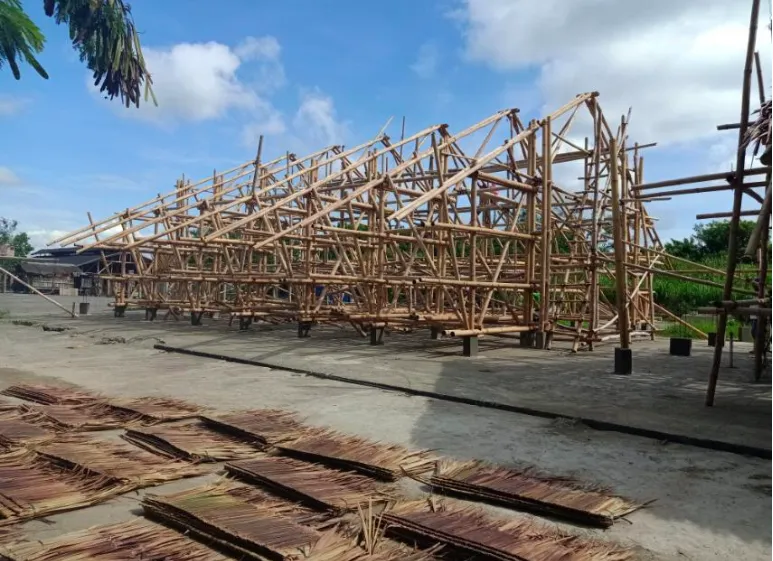
Bamboo is stepping into the spotlight as one of the Philippines’ most promising materials for sustainable and disaster-resilient construction. Once regarded mainly as a traditional or rural resource, bamboo is now being recognized as a modern, eco-friendly alternative that can rival conventional materials like concrete and steel.
A Renewable Material with Huge Potential
During the recent Regional Bamboo Summit in Abra, Paulo Carlo Ferrer, Business and Strategic Development Director of Base Bahay Foundation Inc., highlighted bamboo’s untapped potential to transform the construction industry.
“Bamboo is a resilient, renewable, and sustainable resource that’s widely available across the Philippines. We want it to become a mainstream construction material,” Ferrer said.
Base Bahay Foundation, a non-profit organization, continues to lead the way in developing scientifically tested bamboo-based technologies for housing and public infrastructure. The group conducts ongoing research to better understand how bamboo can be engineered to create permanent, durable, and disaster-resilient structures such as schools, homes, and community buildings.
Building a Strong Bamboo Value Chain
Base Bahay is not working alone. The foundation collaborates with local government units, academic institutions, and development partners to train communities, share bamboo construction techniques, and strengthen the value chain—from cultivation to processing of high-quality, construction-grade bamboo.
This approach doesn’t just promote environmental sustainability but also supports rural livelihoods, creating jobs and income opportunities for bamboo farmers and local craftsmen.
Eco-Friendly and Cost-Effective Housing
Aside from being a sustainable resource, bamboo offers significant cost advantages for the construction sector. Since bamboo is locally sourced, builders can save between 20% to 30% on construction costs compared to traditional materials that rely on imports.
“We advocate for bamboo to help lower carbon emissions and provide affordable housing for families living in hazardous or temporary areas,” Ferrer explained.
This affordability makes bamboo an ideal solution for addressing the country’s housing challenges, especially in disaster-prone regions where safe and durable homes are needed most.
Cement Bamboo Frame Technology (CBFT): A Filipino Innovation
One of the foundation’s most notable contributions is the Cement Bamboo Frame Technology (CBFT) — a hybrid construction system that combines the strength of cement with the resilience of bamboo. The technology draws inspiration from Colombian Bahareque engineering and enhances it with Filipino craftsmanship, resulting in eco-friendly homes and buildings that can withstand earthquakes and typhoons.
CBFT has already been applied in various real-world projects such as affordable housing units, weaving centers, and multipurpose halls across different regions in the Philippines.
According to Ferrer, structures built using CBFT have proven their resilience, surviving multiple typhoons without major damage. Each bamboo pole undergoes a nine-step treatment process to make it resistant to termites, beetles, and decay—ensuring that the material remains strong for decades.
“The issue with failed bamboo structures is not the material itself but the lack of proper engineering. With the right treatment and design, bamboo can last 50 years or more,” Ferrer emphasized.
Meeting Industry Standards and Gaining Recognition
To ensure long-term reliability, Base Bahay’s technologies comply with the National Structural Code of the Philippines and have received accreditation from the National Housing Authority for innovative housing solutions. The foundation also collaborates with local and international universities to establish design standards and testing guidelines that will help mainstream bamboo construction in the country.
Toward a Greener, Safer Future
The call to embrace bamboo is more than an architectural trend—it’s a step toward climate-resilient, inclusive development. With its abundance, sustainability, and affordability, bamboo offers the Philippines a homegrown answer to both housing shortages and environmental challenges.
As Ferrer and other advocates continue to push for innovation and awareness, bamboo may soon take its rightful place as a pillar of sustainable architecture in the Philippines—proving that nature and technology can indeed grow stronger together.