


The event industry has witnessed a significant transformation in recent years, with sustainability taking center stage. From massive music festivals to live streaming and intimate conferences, the push for environmentally friendly practices has become not just a trend but a necessity. Central to this evolution is the role of technology in driving sustainable initiatives and reducing the environmental impact of events.
Environmental Impact of Events
The global event industry is massive, contributing billions to the economy annually. However, it comes with a hefty environmental cost. From energy consumption to waste production, events can leave behind a significant ecological footprint. For instance:
- A typical music festival waste can be around 23,500 tons, of which 68% is not recycled.
- Conferences and trade shows in the U.S. alone produce over 600,000 tons of waste annually, equivalent to the weight of nearly 4,000 blue whales.
- Transportation to events can account for 70-80% of the total carbon footprint of an event.
With growing awareness, event organizers are seeking innovative solutions to address these challenges, and technology is paving the way for a greener future.
How Technology Helps with Sustainable Practices in the Event Industry
The event industry, worth an estimated $1022.4 billion globally, is one of the most dynamic sectors of the economy. However, its environmental impact is substantial, contributing to significant waste and greenhouse gas emissions. A large music festival, for instance, can generate over 20,000 tons of waste, while conferences produce staggering amounts of paper and plastic waste annually.

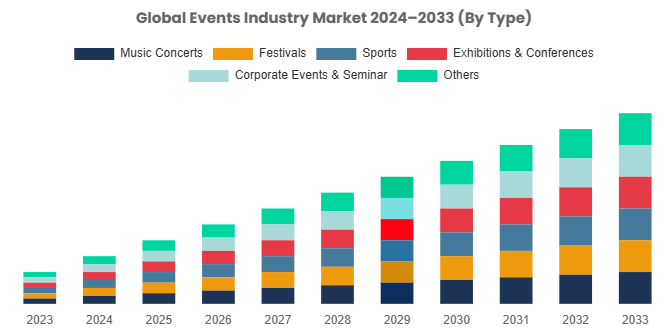
Source: (Custom Market Insights)
To address these challenges, technology has emerged as a powerful ally in promoting sustainable practices within the event industry. Here’s how it is reshaping the landscape to make gatherings greener.
Digital Ticketing: The Paperless Revolution
Gone are the days of printed tickets and pamphlets. A digital ticketing platform like Yotix has drastically reduced the environmental impact by eliminating the need for physical materials. Consider this:
- Switching to e-tickets can save 25,000 trees annually in the U.S. alone.
- Digital QR-based entry systems reduce delays, paper wastage, and even fraudulent ticket duplication.
This simple yet impactful switch ensures smoother operations while cutting down resource consumption.
AI for Smarter Event Management
Artificial intelligence has become an essential tool for eco-conscious event planning. AI-powered solutions allow organizers to:
Optimize energy usage: AI tools can analyze historical data to predict energy demands and avoid waste.
Prevent over-catering: With AI models predicting attendance and food preferences, events can cut food waste by up to 30%.
Reduce travel impact: AI can suggest travel routes and accommodations that minimize carbon footprints, saving an estimated 15-20% on emissions for large events.
Virtual and Hybrid Events
The rise of virtual and hybrid events during the pandemic has proven to be a sustainable model for the future. For example:
- A fully virtual conference emits 1% of the CO₂ compared to an in-person event with international attendees.
- The energy used for a virtual meeting is roughly 7% of what’s required for an in-person gathering.
By incorporating virtual elements, even physical events can reduce the number of attendees traveling, significantly lowering their carbon emissions.
Renewable Energy-Powered Venues
Event organizers are increasingly turning to venues equipped with renewable energy solutions:
- In 2019, a U.K. festival powered by solar panels and biofuels reduced its carbon emissions by 96% compared to the previous year.
- Modern venues with smart energy systems can cut electricity consumption by 20-30% during events.
These venues also leverage tools like energy monitoring apps, which help track and optimize power usage in real-time.
Zero-Waste Initiatives and Smart Waste Management
Technology is reshaping how events handle waste. For example:
- Smart bins with sensors ensure proper waste segregation, increasing recycling rates by up to 40%.
- Composting technology used on-site at festivals can process organic waste, converting it into fertilizer within 24 hours.
- Apps like Trash Tracker let attendees locate recycling stations, helping reduce litter by as much as 60%.
Transportation Tech: Reducing Travel Emissions
As transportation contributes significantly to event emissions, technology provides sustainable alternatives:
Carpooling apps: Encourage ride-sharing among attendees, cutting travel-related emissions by 30% per event.
Electric vehicle (EV) charging stations: Supporting EV users can save up to 10 tons of CO₂ for mid-sized events.
Shuttle tracking apps: Reduce the need for excess shuttles, minimizing unnecessary fuel consumption.
Digital Communication: From Paper to Pixels
Modern events rely heavily on digital communication to eliminate paper waste. Key strategies include:
- Event apps provide real-time updates, maps, and schedules.
- QR codes are replacing printed materials for menus, brochures, and tickets.
- Interactive virtual booths and screens for product showcase, reducing the need for physical setups.
A single large conference can save up to 50,000 sheets of paper by switching to digital communication tools.
Tracking Carbon Footprints and Offsetting
Carbon calculators integrated into event management platforms give organizers the tools to track and offset emissions. These platforms can suggest solutions like:
- Purchasing renewable energy credits to cover event energy use.
- Partnering with organizations that plant trees or fund renewable energy projects.
- Setting emission reduction targets for future events.
- In 2022, over 35% of global event organizers used such tools to measure and offset their carbon footprints.
Making Sustainability the Norm
The integration of technology into the event industry has redefined what sustainable gatherings can look like. While challenges remain—such as cost and accessibility—early adopters are already seeing benefits, from lower expenses to enhanced attendee satisfaction.
For event organizers, the message is clear: adopting sustainable practices is not only good for the planet but also essential for staying competitive in a rapidly evolving industry. As technology continues to advance, greener gatherings will become the new standard.
Are you ready to embrace the future of eco-friendly events?
Author Bio
Rakeebkhan Durani is a seasoned content writer. With a passion for sharing knowledge, he crafts insightful articles that demystify complex topics for his readers. Whether it’s analyzing the latest movements in the share market or highlighting significant expo events today in Singapore, Rakeebkhan ensures his audience stays informed. His coverage extends to upcoming events in Dubai, offering readers a glimpse into the city’s vibrant cultural and business landscape. Through his writing, he connects with passionate readers, fostering a community of informed and engaged individuals.